Given an array of meeting time intervals intervals where intervals[i] = [starti, endi], return the minimum number of conference rooms required.
Example 1
Input: intervals = [[0,30],[5,10],[15,20]]
Output: 2
Example 2
Input: intervals = [[7,10],[2,4]]
Output: 1
Constraints
class Solution:
    def minMeetingRooms(self, intervals: List[List[int]]) -> int:
        starts = sorted(s for s, e in intervals)
        ends = sorted(e for s, e in intervals)

        rooms = 0
        end_ptr = 0

        for start in starts:
            if start < ends[end_ptr]:
                rooms += 1      # 没空房,新开一间
            else:
                end_ptr += 1    # 有一场结束了,复用

        return rooms
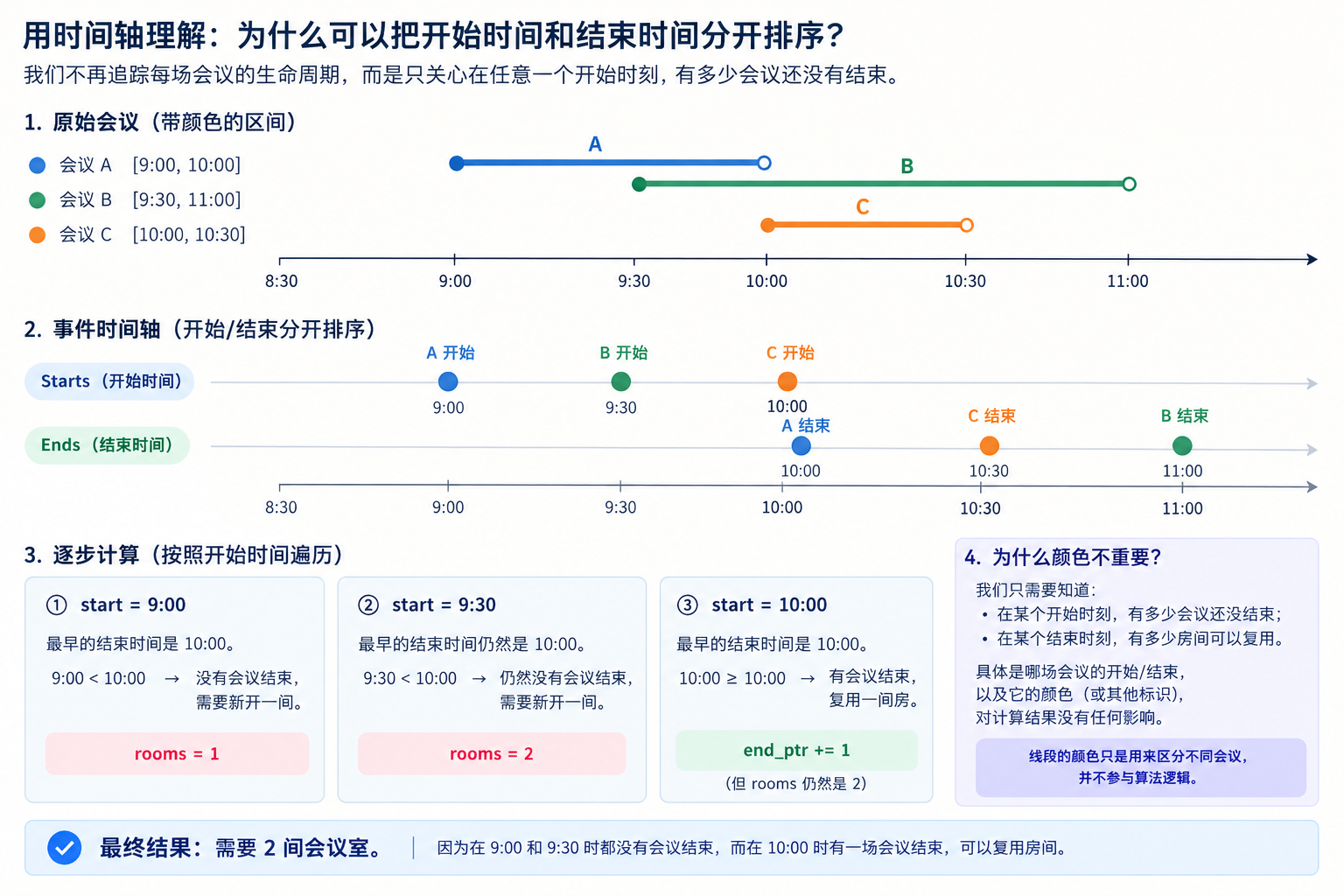
这个题的解法很容易懂,但是我想不通的是为什么可以把开始时间和结束时间分开排序,会议过程真的没有意义吗?这样计算会不会产生重复?但是当用这种时间轴的图显示一下就可以发现,过程确实没关系。我们只需要知道会议开始的时候有没有别的会议结束就可以了,如果有,我们就有可以复用的会议室。
因此具体做法就是
- 把开始时间和结束时间分别从小到大排序
- 循环开始时间,
- 如果开始时间小于结束时间,说明会议开始的时候前面有别的会议没结束,我们就
rooms+=1 - 如果开始时间大于等于结束时间,说明会议开始的时候有会议结束,可以复用
rooms就不需要+=1直接结束时间的指针后移,找到下一个会议结束时间
- 如果开始时间小于结束时间,说明会议开始的时候前面有别的会议没结束,我们就
- 最后
rooms就是我们得到的需要的最小会议室数量。
虽然这么理解看上去没问题,但是算法题最重要的是你的抽象是否正确。所以我又去看了leetcode,他给出了一个非常容易理解的正向思路。
首先我们处理会议室的时候肯定是先处理最早开始的那场然后再处理后开始的。所以先按照start时间把数组排序。假设我们现在有了这样一个数组:
(1, 10), (2, 7), (3, 19), (8, 12), (10, 20), (11, 30)
当我们第一场会议开始的时候我们需要记录它的结束时间
end = [10]
length  = 1
第二场会议开始的时候我们看end里面最小数是10,2<10 所以我们需要单开
end = [10,7]
length = 2
第三场会议开始的时候end里面最小数值是7,3<7,所以length继续增加
end = [10,7,19]
length = 3
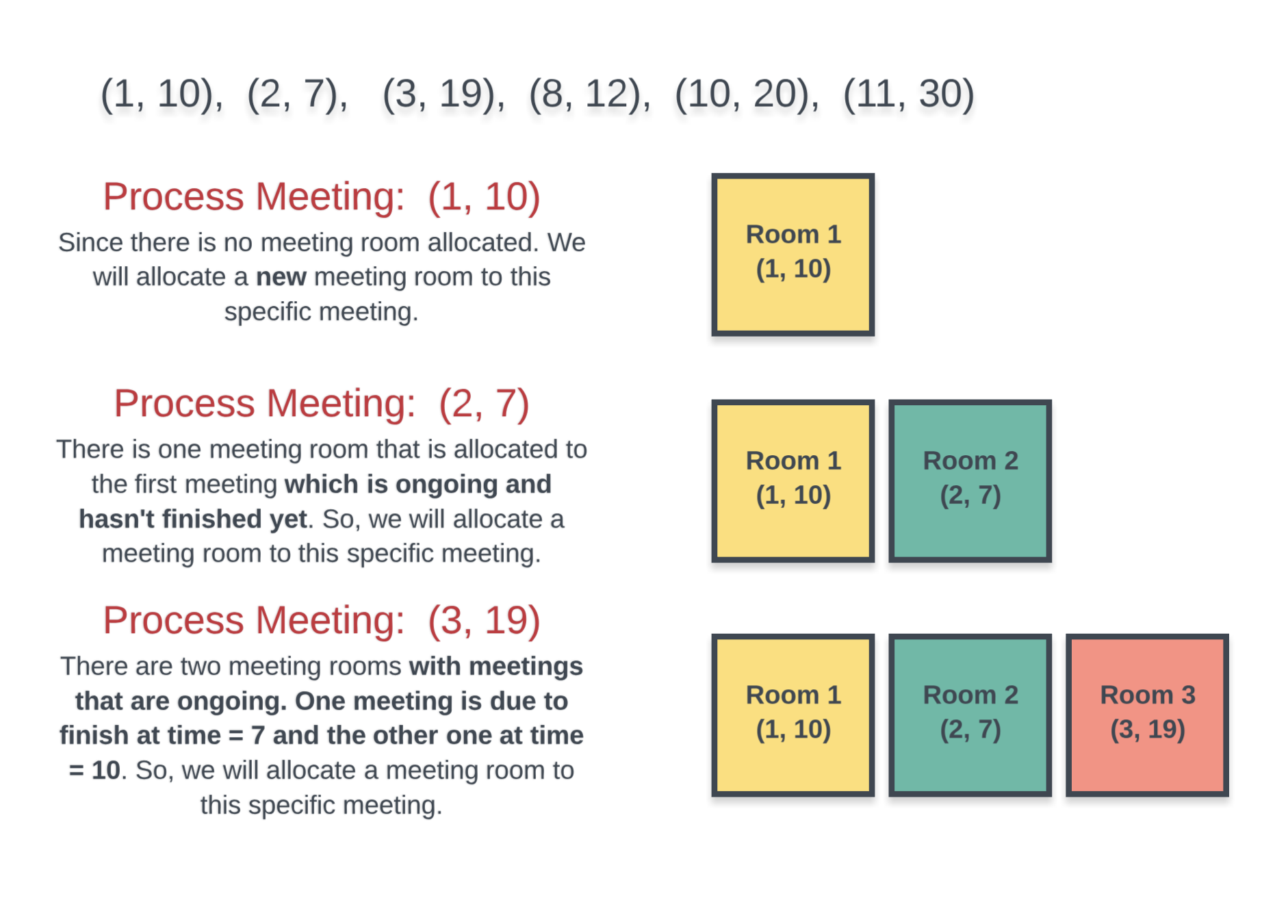
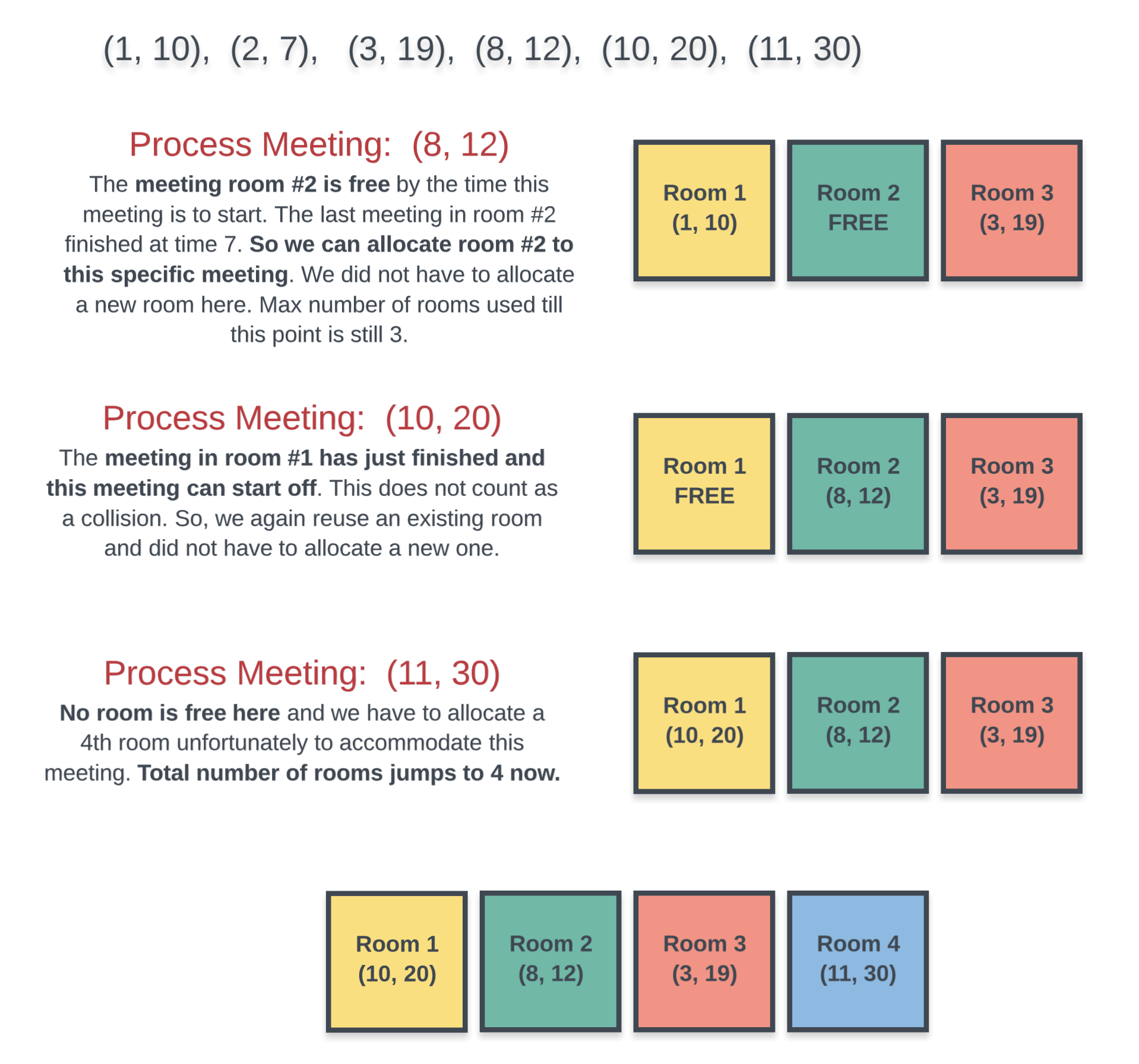
以此类推第四场会议开始时间是8, 8>7所以我们可以复用一个会议室,同时把7移掉
end = [10, 12, 19]
length = 3
第五场会议开始时间是10, 10 >=10所以我们可以再次复用一个会议室,同时把10移掉
end = [20, 12, 19]
length = 3
第六场会议开始时间是11, 11<12所以我们需要再多加一个实验室
最后length = 4
这样我们可以用优先队列来计算这个问题
class Solution:
    def minMeetingRooms(self, intervals: List[List[int]]) -> int:
        # The heap initialization
        free_rooms = []

        # Sort the meetings in increasing order of their start time.
        intervals.sort(key= lambda x: x[0])

        # Add the first meeting. We have to give a new room to the first meeting.
        heapq.heappush(free_rooms, intervals[0][1])

        # For all the remaining meeting rooms
        for i in intervals[1:]:

            # If the room due to free up the earliest is free, assign that room to this meeting.
            if free_rooms[0] <= i[0]:
                heapq.heappop(free_rooms)

            # If a new room is to be assigned, then also we add to the heap,
            # If an old room is allocated, then also we have to add to the heap with updated end time.
            heapq.heappush(free_rooms, i[1])

        # The size of the heap tells us the minimum rooms required for all the meetings.
        return len(free_rooms)
而从这个优先队列的解法我们很容易看出来,其实endtime的这个list只在乎最小值,并不在乎你是什么时候进去的。
此时的问题很容易想到,会不会结束时间10先被处理,然后结束时间7才进入数列,这样的话就可能影响结果。
答案是并不会。
由于我们已经按照会议的开始时间排序,因此后续会议的开始时间只会越来越晚。又因为每场会议的开始时间必然早于结束时间,所以一旦某个结束时间(例如 10)被移除,就意味着当前开始时间已经不早于 10。就不可能再出现结束时间早于 10 的会议。
因此,结束时间列表不需要保留原始顺序,只需要关注当前的最小值:它代表最早能够空出来的会议室。如果这个最小值不大于当前会议的开始时间,就可以复用该房间;否则就必须新增一间会议室。
至此我们完全可以想到把开始时间和结束时间分开来计算了。而线段的表达只是一个比较明显的例子。


文章评论